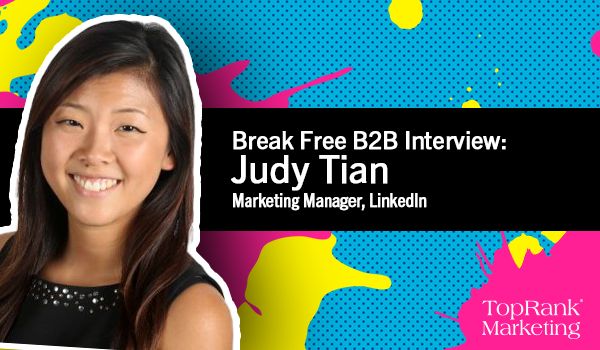
Break Free B2B Series: Judy Tian on Humanizing B2B Through Influencer Marketing
Get link
Facebook
X
Pinterest
Email
Other Apps
As the world's largest social network for professionals, LinkedIn* lies at theepicenterof people and business. Profiles on the platform put a real face on our professional brands, allowing visitors to learn about our interests, career experiences, and personalities. Emphasizing this human element, and creating a genuine sense of community among members, is paramount to LinkedIn's brand mission according to Marketing ManagerJudy Tian. “As a platform where so much of people's job opportunities and personal and professional development takes place,” she says, “we really sought to humanize the brand and make it a more community-based platform, where real stories can be told and people would feel like they have relatable experiences there with others.” [bctt tweet="We really sought to humanize the brand and make it a more community-based platform, where real stories can be told. @judytian07 on @LinkedIn’s #InfluencerMarketing strategy #BreakFreeB2B" username="toprank"] A key aspect of this initiative was launching an ambitious influencer campaign, helping LinkedIn connect more deeply with its audience of marketers and salespeople by highlighting the human side of these professions, through partnerships with recognizable and respected pros from both fields.In her interview with TopRank Marketing PresidentSusan Misukanis, Judy provides a behind-the-scenes look at that campaign and LinkedIn’s overall influencer marketing strategy. She unpacks one specific empathy-driven campaign, where influencers shared personal struggles and trials in their careers and how they overcame them. She also offers her views on measuring the seemingly immeasurable, aligning with influencers around shared values, understanding the crucial difference between reach and relevance, and more.
Break Free B2B Marketing Interview with Judy Tian
If you’re interested in checking out a particular portion of the discussion, you can find a quick general outline below, as well as a few excerpts that stood out to us.
0:30— Growth and progression of influencer marketing
1:15— Understanding relevance and why it matters
2:15— Tracking shared values with influencers
4:00— Example of a human-focused LinkedIn influencer campaign
7:00— Measuring the success of an influencer program
10:45— The difference between reach and relevance
12:00— The "four Rs" as influencer selection criteria
14:00— Overcoming internal skeptics to launch an influencer program
16:45— Paid vs. unpaid influencer initiatives in B2B
19:30— Where will influencer marketing evolve in the next 2-3 years?
21:00— Nurturing micro influencers and integrating offline tactics
Susan:Can you give an example of how LinkedIn is working with influencers at a campaign or ongoing relationship level?Judy:We did a really exciting campaign around telling stories of our influencers. We work with marketing and sales influencers, and so we really wanted to celebrate who they were as a person beyond just their profession. We developed this social campaign called "My Marketing Story" and "My Sales Story," and we asked each of these marketing professionals and sales professionals about, what were some of the most vulnerable moments in their careers? What did they learn from their failures? Maybe some career mistakes or bumps along the way. What we got were some really honest answers about people being fired, people being let go unexpectedly, people learning a lot of business lessons from working at Little Caesar's, and that actually shaping their career in a different trajectory.Susan:Where do you think marketers who are just getting started with influencer program might be heading down the wrong path in terms of how to measure, and how would you counsel them?Judy:I would say that one of the biggest traps that I've seen when it comes to measurement in influencer marketing is really caring about the reach metrics, and trying to understand: if we're working with an influencer how big is their network, and how many followers do they have? I'm really excited that now we're changing the conversation a little bit more to relevancy. When I first started partnering with some of the internal stakeholders that were excited about the influencer programs as this new shiny object, many of the questions were around, 'Okay, if we do this one post with them, how many impressions are we gonna get? Is it a million per influencer?' Even though I think reach is part of the equation, and we want to work with influencers who have a substantial amount of reach, I think I've had to do a lot more internal education of: actually, the relevancy and engagement are what's important. Are the influencers actually experts in the areas you wanna talk about? And are they gonna have credibility with their end users? And then are they going to shed credibility onto your brand as a result? [bctt tweet="Even though I think reach is part of the equation, and we want to work with influencers who have a substantial amount of reach, the relevancy and engagement are what's most important. — @judytian07 #InfluencerMarketing #BreakFreeB2B" username="toprank"] Susan:Who do you admire in terms of influencer marketing?Judy:Mindy Kaling was somebody that I really respected and really enjoyed hearing from at Content Marketing World. There was a question of how does she choose working with a variety of brands, and for her it has to be something that she really cares about. For instance, she loves shopping, so DSW was one of the partners that she chose to work with, because that's something she already feels passionate about. And I just love that she chose to do something that would be authentic and true to her. I think right now there's a lot of backlash that celebrities and influencers are facing because they're accused of being sellouts, and they just promote brands or products that may not necessarily be something they believe in, but they just want the checks. I think the more we can push the conversation, and influencers, to think about it in that way, and brands to also think about partners that will have authentic, true passion for your products and your business, the better it will be for us as consumers. Stay tuned to the TopRank Marketing Blog and subscribe to ourYouTube channelfor more Break Free B2B interviews. Here are a few interviews to whet your appetite:
LinkedIn is launching interactive, Clubhouse-style audio events this month in beta; a video version will come this spring Microsoft's LinkedIn will launch a new live virtual events platform, beginning with audio-only functionality, followed in time by an array of video features for the flexible hosting and management of online events, adding to the platform's creator features, LinkedIn (client) recently announced. TechCrunch Social Media Forecast to Overtake TV in Ad Spend This Year A robust 14.8 percent annual growth rate for social media advertising spending over the 2021 through 2024 period tops online video’s 14 percent and paid search’s 9.8 percent, according to newly-released global ad spending growth rate forecast data. MarketingCharts 2022 Instagram Stories Benchmark Report Instagram Stories are being utilized more than ever by brands on the social media platform, according to recently-released report data of interest to digital marketers from Rival IQ, based on ...
With hybrid and remote work here to stay and digital-first marketing on the rise, how can B2B marketers make the most of these important shifts? Although I’ve written about remote work before, in pieces including “ Remote Communication Opportunities For B2B Marketers ,” “ Day 4,777: Remote Work Tips From 13+ Years As A Distance Marketer ,” and “ Hybrid & Remote Work Trends That Will Alter The Future Of B2B Marketing ,” the permanent changes to where and how we work have significant implications that will affect B2B marketers forever, so it’s time to reassess. Let’s take a close look at five ways B2B marketers can make the most from remote and hybrid work and digital-first brand interactions, from the perspective of someone who’s been working entirely remotely for 15 years, and from several top voices on the future of work. 1 — Adjust To The Permanent Shift In How We Work As I enter my thirty-eighth year working online, I’ve worked remotely for 5,409 days, and spent close to 40 p...
Is your agency a vendor or a partner? In response to the shifting market and evolving role of the CMO, agency-brand partnerships are shrinking in average duration, less than three years now, compared to over seven in 1984. But strategic, strong partnerships between brands and agencies have become increasingly important as 64% of CMOs expect to feel more pressure to demonstrate tangible short term results in the next 2-3 years. This pressure also signals a big opportunity for CMOs to demonstrate the value of marketing as a strategic function with organizations. The right agency, that can support the brand in a true partnership, can be critical in helping CMOs achieve their goals and win over the rest of the C-suite. That right agency, though, is tough to find — especially in the B2B space where market needs are shifting rapidly and new spaces and topics are constantly being created. How can you find an agency that isn’t just a vendor? How can you trust that you’ve chosen a true...


Comments
Post a Comment